


For projects in cold regions-such as northern Europe, high-altitude areas, or winter-cold industrial zones-selecting S335J0WP Corten Steel raises a critical question: Can it withstand temperatures <=-10℃ without brittle fracture? Brittle failure in low-temperature environments can lead to sudden structural collapse, making this a core concern for buyers. However, as S335J0WP is not a standardized grade, there are no official guidelines for its low-temperature application. What is the definitive answer, and what precautions are essential if used? The core conclusion, based on European steel toughness norms and industrial practice, is clear: S335J0WP is not recommended for direct use in <=-10℃ regions unless suppliers provide explicit low-temperature impact test data; targeted precautions to reduce brittle fracture risk are mandatory. Below is a concise, evidence-based breakdown.
Key Premise: Grade Nature & "J0" Toughness Limitation
To understand why low-temperature use is risky, two critical points must be clarified first-this ensures the rationality of all subsequent precautions:
Non-Standard Grade Attribute: S335J0WP is not listed in EN 10025-5 (the main European standard for Corten Steel). Based on European steel naming conventions, it is inferred as a medium-low strength weather-resistant steel (yield strength ~235-335MPa) with "W" (weather resistance), "P" (thermo-mechanical rolling), and "J0" (impact toughness grade) attributes.
"J0" Suffix: No Low-Temperature Toughness Guarantee: The "J0" in S335J0WP defines Charpy V-notch impact toughness tested at 20℃ (minimum energy >=27J), per EN 10025 series norms. Unlike "J2" grades (tested at -20℃), "J0" provides no assurance of toughness at <=-10℃. In fact, most medium-low strength steels (including similar weather-resistant grades) see a sharp drop in ductility and impact energy as temperature falls below 0℃-a universal trait that makes S335J0WP inherently risky for <=-10℃ use.
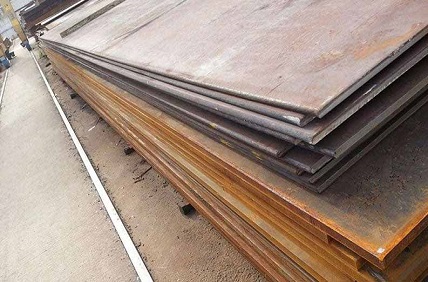
Critical Precautions for <=-10℃ Application (If Supplier-Verified)
If suppliers can provide EN 10045-1 compliant impact test reports (proving >=27J at <=-10℃), the following precautions are non-negotiable to avoid brittle fracture. These measures focus on reducing thermal stress and avoiding toughness degradation:
1. Material Verification (Pre-Procurement)
Demand a detailed Material Data Sheet (MDS) and EN 10204 Type 3.1 mill test report from suppliers, explicitly stating impact energy values at the actual service temperature (e.g., -10℃, -20℃ if needed). Reject any material without this verification.
Prioritize thin-to-medium gauge sheets (≤20mm) if possible. Thicker plates (>20mm) have higher internal stress and slower heat dissipation, increasing brittle fracture risk in low temperatures.
2. Processing & Fabrication Controls
: Preheat S335J0WP to 10-20℃ before cutting, bending, or welding. Avoid processing at temperatures <=0℃-cold working increases internal stress and further reduces toughness.
Low-Hydrogen Welding: Use weather-resistant, low-hydrogen consumables (ER70S-GNiCu wire for MIG, E7018-G electrodes for SMAW) to prevent hydrogen-induced cracking (exacerbated in low temperatures). Dry E7018-G electrodes at 300-350℃ for 1 hour before use; preheat the base metal to 80-120℃ during welding.
: For welded or heavily formed components, perform post-processing stress relief annealing at 550-600℃ for 1-2 hours (depending on thickness), then cool slowly. This removes residual stress, a major trigger for brittle fracture in low temperatures.
3. Installation & On-Site Protection
Avoid installing S335J0WP components in open, wind-exposed areas if possible. Use windbreaks or thermal insulation wraps for critical load-bearing parts to reduce rapid temperature fluctuations (which induce thermal stress).
Ensure bolted connections are tightened at temperatures >=0℃. Low-temperature tightening increases the risk of bolt shear and joint loosening due to material brittleness.
4. Post-Installation Maintenance & Monitoring
Inspect components quarterly during cold seasons for signs of brittle damage (e.g., small cracks at welds, edge chipping). Use magnetic particle testing (MPT) for weld joints to detect invisible microcracks.
Keep the surface clean of ice, snow, and deicing salts. Salts accelerate corrosion and can interact with low temperatures to worsen brittle fracture risk.
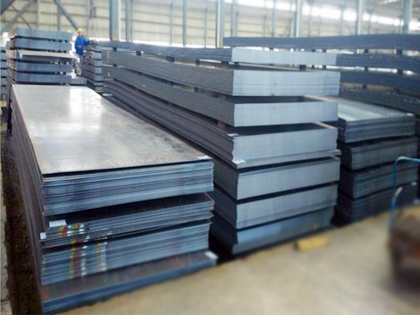
Non-Negotiable "Don'ts" for <=-10℃ Use
Do not assume "Corten Steel" equals "low-temperature resistant"-weather resistance (anti-corrosion) and low-temperature toughness are independent properties.
Do not use S335J0WP for critical load-bearing components (e.g., main support beams) in <=-10℃ regions without supplier-verified low-temperature impact data.
Do not skip preheating or stress relief annealing-these are the most effective measures to reduce brittle fracture risk, and cutting corners here is catastrophic.
In summary, S335J0WP Corten Steel cannot be directly used in <=-10℃ regions due to its "J0" grade's lack of low-temperature toughness guarantee. If supplier-verified low-temperature impact data is available, strict precautions covering material verification, processing controls, installation protection, and maintenance are mandatory. For maximum safety, consider replacing it with standardized "J2" grades (e.g., S355J2WP, EN 10025-5 compliant) that guarantee -20℃ impact toughness-this avoids the risks of non-standard grade verification.


